Category: Insect Controls

  • How to get rid of whiteflies: 10 way to prevent and control whiteflies in your garden

    Whiteflies are small true bugs, white during adult stages whereas finding on the undersides of the leaves like small white tiny dots during the nymph stages that appear flattened, oval scales without legs and remain stick to these sites unless they become motile after sucking sap from the leaves. They are supposed to be the carrier of several viral and fungi diseases especially Leaf Curl Virus and Sooty mold are more notable in the garden scenes. Two most occurring strains are Bemisia argentifolii and Bemisia tabaci that can do noticeable damage to any edible garden once they become capable of flying while the best strategy to control them shows significant results during the Nymph stages when they are present undersides of the leaves. Before they cause considerable damage to the new growth and tender shoots, learn how to get rid of whiteflies quickly on your plants.

    How to Prevent and Control Whiteflies in the Edible Gardens

    #1 PyGanic Gardening 8oz, Botanical Insecticide (Chemical – Editors’ Choice)

    It’s a broad-spectrum contact insecticide containing pyrethrins extracted from the chrysanthemums that is very effective against a variety of pests and is considered ideal for the edible gardens and can be sprayed on vegetable, fruits, and ornamentals without any fears of residual effect. To see how do you get rid of whiteflies using its powerful formula by diluting 1 to 1.4 ounces of this concentrate in 1 gallon of water. Ensure a good spray coverage using a mist sprayer. Avoid spraying during rain while it can be sprayed till the day of harvests.

    #2 Ed Rosenthal’s Zero Tolerance-Herbal Pesticide (Natural – Editors’ Choice)

    This herbal pesticide is made from food-grade cinnamon, thyme, rosemary, and clove oils to get rid of whiteflies and several other garden pests. It can work exceptionally well on first spotting of whiteflies on the undersides of the leaves and works as strong deterrent and killer on contact. It has no side effects and you can use it 2 weeks before any harvest.
    1 quart of this concentrate makes 1 gallon of solution to be used on the entire plant foliage with the help of mist sprayer.

    #3 Rubbing Alcohol (Solimo 70% Isopropyl Alcohol)

    The first question that arises in your mind on first spotting them on your plants is how to get rid of whiteflies quickly?
    Make a mixture of rubbing alcohol with water, liquid soap and mouth wash to wash them away using a pressurized sprayer especially on the undersides of the leaves that dislocated and kill them gradually on the ceasing of sap-sucking from the leaves.
    For 10 ounces solution, add 2 ounces of rubbing alcohol, 2 ounces mouth wash, 1-ounce liquid soap and 5 ounces of tap water. Spray in the evening and monitor leaves for any sign of burning. Avoid adding liquid soap if the surrounding temperature is too high.

    #4 Azera Gardening

    Its combination of Azadirachtin from Neem (1.20%) and Pyrethrins from Chrysanthemums (1.40%) respectively that is very effective against whiteflies on plants in your vegetable or organic garden. Its efficient formula kills even the resistant whiteflies and other soft and hard-bodied pests like aphids and beetles in any edible garden. It naturally breaks down in sunlight that can be applied on the day to harvest fruits and vegetables. Add 1.25 ounces of this concentrate in 1 gallon of water and thoroughly spray your plants using a mist sprayer or a fogger.

    #5 Organocide® Bee Safe 3-in-1 Garden Spray

    Organocide contains 0.08% Sesame oil along with soybean extract and fish oil to make a powerful blend that works as an insecticide, acaricide, and fungicide together. While you have such type of product at hand that you don’t need to worry how to control whiteflies, their eggs and nymph on your garden plants and more sweetly it can be used till the time of the harvest without fearing any toxicity due to its organic nature. It doesn’t harm bees besides equally effective against sooty mold or other diseases that are associated with the whiteflies in your garden
    Caring surface temperature is very important for its applications. Avoid if the temperatures exceed 95°F.
    A single application is enough for complete control of whitefly on plants. You may repeat after 7 days if the infestations prolong.
    Add 3 ounces of Organocide®3-in-1 Garden Spray in 1 gallon of water and shake well before use. A hand-held sprayer can do the rest of your job.

    #6 Bonide – Insect Control Systemic Granules

    It contains 0.22% Imidacloprid as its active ingredient. A systemic insecticide is better to use outdoors or lawns for stopping whiteflies to enter into the house. If you can manage to kill them from lawn and ornamental plants then whiteflies don’t become a menace in your gardening. Don’s put on any type of edible plants until you can wait for 3-4 weeks to harvest. It’s a granular application that is easy to apply.
    Add 1 pound of granules to 8 medium sizes rose plant or shrubs of the similar type. For containers, add 2.5 tablespoons in 1 gallon of water. The application may be repeated after 8 weeks during the growing season for complete coverage of whiteflies in house and ornamental plants including lawns.

    #7 Nature’s Good Guys-1,000 Encarsia Formosa Eggs (control whiteflies biologically)

    These are eggs of tiny flying insects that either paralyzes Nymph by laying their eggs inside them or eat it up altogether. They don’t interfere with the activity of other beneficial insects but in harmony with them. Hanging cards containing these insects are placed on the lower leaves of the plants that need immediate release upon arriving at your garden. They are capable of controlling several traits of whiteflies and are often not noticeable in the garden. Releasing and hanging these cards on your edible plants is quite an easy job.

    #8 Beneficial Delphastus Pusillus-White Fly Predator (control whiteflies biologically)

    It’s a small black beetle that is the voracious eater of all existing strains of whiteflies including giant whitefly. If whiteflies disappear during or after their application, they will feed on aphids and spider mites while it’s adult and larva both remain active in preying all stages except flying adults of whiteflies in your edible garden. On average, 1 beetle can prey as many as 150 eggs in a day. Pack contains a group of 25 beetles that are fairly easy to release in your garden.

    #9 Monterey -70% Neem Oil (16 Ounce) (control whiteflies organically)

    The question arising from the edible gardeners that how to control whiteflies organically is over now as this product is specially made from Neem extracts that has the ability to prevent and control several pests including whiteflies, aphids and spider mites on vegetables & fruits, ornamental & shrubs, roses & flower along with the fungicidal properties to work against Downy & Powdery mildew, leaf spot and rust wilts. It immediately breaks down into organic matter after its applications & never does any harm to edible plants.
    This product is more effective if applied after every 10 days. For heavier infestations, spray after every 7 days.
    Add 1 ounce of 70% Neem oil in a gallon of water and spray your plants using a Pressurized sprayer washing them from upside down.

    #10 Garden Safe Brand Insecticidal Soap Insect Killer (control whiteflies organically)

    It’s another ready to use a product from the range of organic insecticides which contains 1% Potassium salts of Fatty Acids that doesn’t let whiteflies to change their instar and they die of starvation in the process. It’s a contact poison and damages cell membrane of the all soft-bodied insects. It can also be used until the time of the harvest without any residual effects on the edible plants. No need to make any mixture, just pick the pack and fix whiteflies at the spot.

    What are whiteflies and where do they come from?

    Coming towards identifying these tiny creators you must be carious that what do whiteflies look like? It’s not hidden anyways that they belong to class Insecta and the most common occurring strains in the US climate are Bemisia argentifolii and Bemisia tabaci where B.argentifolii is also called silver leaf whitefly. Most of the species have a wingspan of 3 mm or even less, the body is 1 mm to 2 mm long. Some giant whiteflies have length up to 5 millimeters. They are small tiny insects when flying and tiny, flattened, oval scales when present undersides of the leaves as Nymphs where they are hardly noticed due to their hiding locations. B.argentifolii is usually causing the biggest destructions in the vegetables and fruit orchards while B. tabaci causes more destruction to the field crops such as Tobacco, Cotton, and Cereals. The best time to identify any of these strains is during their Nymph stage when they are present undersides of the leaves busy in sucking sap from the newly emerged leaves and tender shoots. They develop red eyespot upon changing their instar from Nymph to adult stages of their growth. The pupa of the Silver leaf whitefly looks rounded and dome and even pointed sometimes. The pupa has no filaments. They have several pairs of wax filaments arising from the top. Adults are generally white, as their name indicates, although the body of the Silver leaf is slightly more yellow. However, their color alone is not the basis for their identification but the difference in the angle of their wings to their body.

    How do whiteflies damage plants?

    Generally speaking, gardeners don’t like plants infested or damaged by whiteflies when they visit nurseries to buy plants as the quality of the plants deteriorate after they are infested with whiteflies and its not wise decision to bring already infested plants to your edible garden that may damage your existing plants. Whiteflies infest numerous garden plants by sticking them to the undersides of the leaves with the help of stylus that they insert into the epidermal leaf layer and suck the plant sap. Besides sucking sap they secrete sticky saliva on the surface of the leaves that creates an ideal media to attract sooty mold and many other fungi diseases. Whiteflies are also considered the carriers of tomato yellow leaf curl virus (TYLC) and Gemini Virus on Cotton causing (CLCV) which are hard to recover and diminishes thousands of acres of standing crops in the growing season.

    What is the lifecycle of whiteflies?

    Females often lay down eggs on the undersides of leaves, shoot curvatures and undersides of buds on the plant. Eggs numbers vary from 200 to 300 depending on the temperature and humidity in any particular area. A female may live up to 45 days that again depends on temperature. All life stages are passed on the same host plant except for the adult stage that migrates to neighboring plants. Eggs are in the form of tiny spindles in semi-circles. Hatching takes place in 8-10 days at 65°-75°F. Upon hatching, nymphs remain stick to the leaves for their feed until they pass other stages to become a flying adult. Depending on the temperatures, whiteflies may have 11 to 23 generations annually. It’s advisable to make necessary arrangements to control them when their populations exceed 5 adults per leaf or 10 Nymphs/leaf but it’s much better to keep them in control before they start flying to other plants to infest them.
    Rapid multiplication of whiteflies does compel the serious gardeners to look into prevention and control techniques that are organic, natural and biological for a sustainable control without leaving residual effects on the edibles and their health as well. We will consider these techniques but our priority is how to control whiteflies organically.
    Before we go into the further details look into the cultural practices that help prevent and know how to get rid of whiteflies naturally;

    How to prevent whiteflies in your garden?

    • Induce the culture of raising beneficial insects such as parasitic wasps, lacewings and ladybird beetle and create an environment to invite small predatory birds to live on these flies.
    • Don’t bring infested plants to your garden area from the outside climate or nurseries.
    • Hang yellow sticky traps and cards having a thin layer of petroleum jelly to control early invasions.
    • Initiate removal host plants especially weeds, plant debris and stubbles from your gardening landscape.
    • Avoid overpopulating your space and observe fair distances while growing new plants in your indoor gardens.
    • Don’t over-fertilize with excessive Nitrogen applications as it invites whiteflies to infest plants.
    • Maintain air crossing among the plants and a fare interval between successive watering.
  • The 8 Best Natural Bug Killer – Biological Pest Control 2020 Reviews

    Top 8 Organic Insect Controls for Greenhouse

    #1 Best Live Ladybugs for Greenhouse: (Medium Bag) 300 Live Ladybugs

    With this product from Good Bugs, you can try out a really natural way of controlling the insects attacking your cannabis plants. You will receive a bag of 300 live ladybugs on your doorstep for a bargain price – and then all you need to do is release them onto your plants. Ladybugs love to eat the pests that you want to get rid of – aphids, spider mites, thrips, and leafhoppers – so they will be gobbling them up in no time.
    This number of ladybugs would be perfect if you just have a couple of pots of cannabis growing in your greenhouse. A great product for those of you who want to try your hand at organic cannabis cultivation and don’t want to put any nasty chemicals onto your plants. Just make sure you are around when you have these bugs delivered as you don’t want to return from a weekend away to a doorstep full of dead ladybugs.
    #Aphids #Ladybugs #Organic #Organic_Cannabis_Growing #Spider Mites #Thrips

    #2 Best Organic Remedy for Fungus Gnats: (12 Count) Bio Care Naturals S5333

    One of the real difficulties faced by cannabis growers is the presence of fungus gnats – these are tiny flies and if you see these lingering around your plants this is bad news. They attack the roots of your plants and so weakening the foundations of your plants. But, don’t despair, thanks to these Gnat Stix from Bio Care Naturals you can easily get rid of these pesky predators.
    Regarded as the most effective way to get rid of fungus gnats from cannabis plants these Gnat Stix are super easy to use. Simply place them in the pot where you are growing your plants, or next to them in the plant bed and they will trap and kill any fungus gnats buzzing around. Sometimes the cheapest and simplest methods really are the best – the only downside is that you might need to order a few of these packs as the Gnat Stix fill up quick!
    #Fungus Gnats #Gnat_Stix #Non_Toxic #Organic #Root_System

    #3 Best Natural Method for Controlling Pests: (With 2 egg cases) Praying Mantis Egg Case

    If you like the idea of using ‘friendly bugs’ to treat pest problems on your cannabis plants then one method you can try is through hatching some praying mantis. As its name suggests, a praying mantis will gobble up any bugs it comes across and so is great if you have an infestation of aphids, lice, beetles, whiteflies, or spider mites.
    This product from Josh’s Frogs contains two eggs, with each egg containing 50 – 200 baby praying mantids. Once received, these eggs will hatch within 3-10 weeks but if you are wanting to delay hatching you can keep them in the fridge and remove a month before you want to hatch. This is a great natural and organic option for outdoor cannabis growers and you will soon be calling the praying mantis your best friend.

    #4 Best Praying Mantis Eggs for Pest Control: (100-400 Babies) Praying Mantis 2 Egg Cases

    To avoid using harmful chemicals on your cannabis plants, but keep them bug-free then why not try the praying mantis method. These very helpful insects will eat up the common pests which enjoy attacking your plants – such as spider mites, whiteflies and aphids. Fortunately, they don’t like the taste of ladybugs so your other helpful bug friends will be safe to do their work with a praying mantis around.
    These eggs from Hirt’s Gardens will hatch pretty quickly – from between 10 to 20 days – and included with this purchase is the Hirt’s Hatching Habitat so you can watch the hatching take place. Instructions are included so if you are new to praying mantis hatching it covers everything you need to know. With these predator insects in your garden or greenhouse, you can be confident that your precious cannabis plants are being protected in the most natural way possible.
    #Aphids #Beetles #Lice #Organic #Praying_Mantis #Spider Mites #White Flies

    #5 Best Fruit Fly Culture for Praying Mantis: Producing Wingless Drosophila Melanogaster

    If you have opted for the praying mantis method of controlling the pests that frequent your cannabis plants then you need to do a little maintenance with these hungry insects – especially if you are keeping the praying mantis indoors. But don’t worry, you don’t need to be on your hands and knees catching spiders – you can use this Fruit Fly Culture mix from Josh’s Frogs.
    This is the perfect food for praying mantis and once you have received these in the post, the fruit flies will be ready to eat in 1 – 3 days. Keeping the praying mantis happy will mean that it can continue to eat up the aphids, whiteflies, spider mites, and lice that can destroy your cannabis plants. A great option for keeping your cannabis garden a natural, organic and chemical free space.
    #Aphids #Fruit_Fly_Culture #Organic #Praying_Mantis #Spider Mites #White Flies

    #6 Best Ladybug Nectar: (8 Ounces) Hirt’s Gardens Ladybug Nectar

    If you love organic growing and you’ve invested in any of the ladybug pest control products in this list, then you will need to think of the best strategy to dissuade them from simply abandoning your garden and plants. This excellent nectar by Hirt’s Gardens goes a long way to creating an environment that your freshly released ladybugs are going to love.
    Made from high nutrient ingredients this mixture substitutes for nectar, honeydew, and pollen giving your ladybugs a good rounded and nutritious feeding area that will make them want to hang around. The pros of this product are that it works great keeping ladybugs in the garden and you only need to spray about a quarter of the area you want to keep them in. The cons are that it is more expensive than the bugs themselves and it doesn’t directly treat bug infestations.
    #Aphids #Ladybugs #Nectar #Organic #Pollen

    #7 Best Habitat for Praying Mantis: Backyard Safari Praying Mantis Mansion

    If you’ve gone to the effort of hatching a praying mantis or attracting one to your growing area, then the last thing you want is for it to leave before it has got your aphid or spider mite situation under control. This excellent device from Backyard Safari works as a trap but also doubles up as a habitat for your new best friend in your battle against the bugs. You’ll soon learn more about praying mantis as you watch them in the habitat you create.
    The pros of this product are that it is a nice and cheap way to create a secure home for you praying mantis, it is not too big, and it is made of flexible mesh material that you can see through and watch your mantis grow. The cons are that it is made of cheap material that is easy to snag if you are not careful and can be very difficult to clean as a result.
    #Aphids #Crickets #Organic #Praying_Mantis #Spider Mites

    #8 Best Insect Killing Soap for Cannabis Plants: Safer Brand 5118 Insect Killing Soap

    A favorite option of cannabis growers is insect killing soap – it is made up of potassium salts and fatty acids which serve to weaken the shell of the bug which you are wanting to target. If your plants are being attacked by mealy bugs, whiteflies or aphids then investing in this insect killing soap from a safer brand will be a good way of getting rid of them.
    Make up a solution of this from the concentrate (16 ounces makes up to 6 gallons) and give your plants’ a thorough dousing – you may need to repeat this every 7-10 days to make sure those nasty bugs are kept away. In terms of cons, the only real downside of this product is that you can’t really use in on your buds as it may affect the taste and smell of the cannabis you cultivate. On the upside, you can keep using this insect killing soap up until you harvest.
    #phids #Insect_Killing_Soap #Mealy_Bugs #Organic #White Flies

  • How to get rid of caterpillars: 12 way to kill caterpillars on plants (Updated for 2022)

    Caterpillars are the larval stage of the order Lepidoptera, which mainly comprises of the insects such as butterflies and moths. Due to the indirect transition of these insects from caterpillars to adults, caterpillars require a huge amount of food to gain enough energy to undergo a complete metamorphosis and to become a healthy adult. They typically increase their weight by thousands of times in a span of a few months.

    How to get rid of Caterpillars?

    Since it has been established that caterpillars are pests and unwanted in most cases, some important remedies must be done in order to take care of any outbreak in a garden. Some conventional methods, as well as the use of some natural pesticides, can help tackle the caterpillars in a garden. The most commonly used methods are listed below.
    It’s necessary to look for the home remedies to get rid of caterpillars but priority is to control caterpillars instantly if they have already invaded your garden. Here are some organic & natural solutions first. In addition to home remedies, some products are available commercially which can help control a caterpillar infestation in the garden. These insecticides are both, organic and inorganic in nature. Some products are listed below.

    #1 Monterey Garden Insect Spray with Spinosad (Chemical – Editors’ Choice)

    Spinosad is also comprised of bacteria and is made by fermentation that contains both spinosad A and Spinosad D as its active ingredient at 0.5%. The results of the application appear quite quickly in at most 2 days. The concentrate should be diluted with a ratio of 4 tablespoons of concentrate to one gallon of water and should be thoroughly sprayed on the crop. It’s used to control caterpillars, inchworms, cabbage worms, loppers, and little green worms on edible plants. Spray your plant foliage thoroughly using a mist sprayer in the evening. This is an organic product and there is no harm in using it to any edible garden.

    #2 Monterey Bacillus Thuringiensis (B.t.) Worm (Natural – Editors’ Choice)

    This product contains BT that is a species of bacterium which works significantly well against caterpillars and worm type insects such as cabbage worms, Spotted bollworm, inchworms, fall helianthus, and several leaf-eating worms and compatible to use on a variety of the edible plants including microgreens, herbs, broccoli, beans, cauliflower, tomatoes, and lettuces. It doesn’t adversely affect birds, honeybees, ladybugs and other beneficial insects on your edible plants. Its classified organic product that can be used on the day of the harvest. It’s ready to use to apply directly to plants using a builtin trigger for the spraying purpose.

    #3 Orcon Live Trichogramma

    Trichogramma species are effective at destroying leaf-eating worms and tiny green worms on cabbage and other leafy greens. Trichogramma also attacks the eggs of the cabbage worms and destroys them before coming into hatching position and most prominent being the American bollworms. Parasitic Trichogramma lay their eggs inside the eggs of the caterpillar after locating them on plants. Their hatching takes place on the eggs of caterpillars which are eaten by Trichogramma before they hatch. Then they emerge as adults to continue their life cycle. It is a natural and completely harmless process as even the adult wasps are barely visible and do not harm other beneficial insects except the caterpillars. Care must be taken to not release during or after an insecticide spray as it may kill these beneficial parasitic wasps in your garden. It is seen to be effective in the elimination of green caterpillars.

    #4 Bonide Neem Oil Repellent

    Bonide Neem Oil is a perfect pest control option that contains 70% Neem oil extracted from the seeds of Neem plants and is widely used in the organic gardening for controlling small green worms at the initial stages. It works as an insecticide, fungicide, and miticides as well and is effective on the variety of caterpillars including tiny green worms and wooly bear caterpillars. This product is great to be used on all edible greens, roses, and ornamental plants.
    32 ounces bottle comes in ready to use concentrate with a convenient spray nozzle. Just spray on the spotting of any of the listed worms in your garden. It is safe and organic that can be sprayed on the day of harvest.

    #5 Bonide – Pyrethrin Garden Insect Spray: (how to get rid of silkworms?)

    Its active ingredient is 1% pyrethrin that is derived from the chrysanthemums. This is a fast and effective way to kill webworms, leafhoppers, monarch caterpillars, and silkworms on vegetables especially asparagus, broccoli, tomatoes, peppers, and beans in an edible garden. Its mode of action is to target the nervous system and block feeding that leads to dehydrate caterpillars on your plants. It degrades rapidly after being exposed to climate and leaves no harmful effects on edibles or climate.
    Add 3 tablespoons of concentrate in1 gallon of water using a mist sprayer to spray on the entire foliage of plants under attack.

    #6 Tengard SFR One-Shot Liquid Insecticide

    Although not an organic insecticide, this product is advantageous over its organic counterparts due to its longevity and systemic activity. Having Permethrin as the active ingredient, it is effective against many pests, including caterpillars.  However, it has side effects as the poisonous residual may remain in the soil for 60 days. Similarly, being a proper insecticide, it can eradicate the beneficial insects as well. However, the product is economic as one bottle makes 96 gallons of spray. Add 1/3rd ounces of insecticide in 1 gallon of water using a power sprayer to cover damaging areas of caterpillars in your garden.

    Home Remedies (how to kill caterpillars?)

    #7 Killer Oil-Soap Spray

    By mixing 1 tablespoon of mild liquid soap and 1 cup of vegetable oil of choice, an effective insecticide can be made, which is to be sprayed directly on the affected plant. For a larger infestation, mixing 2 teaspoons of the mixture and 1 quart of water and spraying it on the affected area will help.

    #8 Diatomaceous Earth Spray

    Diatomaceous Earth is made from fossilized algae and remains of diatoms. Due to its excessive absorbing ability, a solution to it can be sprayed on the infected plant to get rid of the caterpillars. The solution is formed by mixing 4 tablespoons of diatomaceous earth in 1 gallon of water.

    #9 Cabbageworms home remedy

    Neem oil is a natural insecticide and hence, must be used with caution so as not to harm the beneficial insects. Diluting a small amount of neem oil (2 ounces or less) in 1 gallon of water and lightly spray the affected area will kill the cabbage worms on edible plants.
    Another best strategy to kill cabbage worms is to dust the leaves of the plants with baking soda. Baking soda dehydrates cabbage worms and kills them on your edible plants. It’s safe to use and has no harmful effects on edible plants.

    #10 Cover the Plants

    Covering the plants with a thin mesh will keep them safe from the Lepidoptera adults, looking for a host to lay eggs.

    #11 Complementing the Garden

    Some strong-smelling plants will act as natural repellents for the caterpillars, so planting such plants in the garden will keep it less attractive to the caterpillars. These plants include Peppermint, Lavender, Mugwort and Sage, etc.

    #12 Making the Garden Friendly for Birds

    By attracting natural predators of caterpillars to the garden, their outbreak can be controlled. Setting up birdbaths and bird feeders may help the cause.

    what do caterpillars eat?

    Lepidoptera insects, in their caterpillar form, are voracious feeders and are one of the serious agricultural pests. Most species of moths in their caterpillar stage cause serious damage to fruits and agricultural produce. Therefore, a gardener must take measures to tackle this problem.

    How many legs do caterpillars have?

    Caterpillars of almost all insect species are herbivorous and nocturnal in nature, feeding primarily on leaves during the night. However, a few species are carnivorous while some feed on animal products such as wool, hooves, and horns, etc. Caterpillars can be easily identified by their eruciform body shapes. They most often have 3 pairs of true legs and five pairs of prolegs, making 16 legs in common. Some exceptional species of butterfly caterpillars, however, have no legs at all.

    How long do Caterpillars live?

    The caterpillar stage is not the final stage in the life cycle of Lepidoptera, therefore, the time span for which a Lepidoptera remains a caterpillar varies from species to species. The time for which some famous parasitic caterpillars do not transition to their pupal stage is given below.

    • Inchworms – depending upon the amount of food available, inchworms may turn into their pupae in 2 to 4 weeks.
    • Woolly bears – these caterpillars are found in the Arctic and hence, are adept at coping with such extreme temperatures. The life cycle of woolly bears can span up to 14 years due to the fact that they hibernate in extreme winters.
    • Silkworms – they remain in their larval stage for 24 to 33 days.
    • Monarch Caterpillars – in peak summer and warmer climates, the monarch caterpillar takes about 10 to 14 days to transition to the pupal form.
    • Cabbage worms – they take almost 17 to 18 days to convert from their larval to the pupal stage after hatching.

    Commonly found Garden Caterpillars

    As most of the caterpillars are herbivorous in nature, they are naturally attracted to any greens which are grown in gardens. The adults will lay their eggs on their prioritized plants, which results in the appearance of caterpillars, which may be a cause of alarm for the gardener. Caterpillar identification can be a difficult task as many of them are excellent at camouflage and can remain hidden for long periods of time. In the case of extreme parasitic caterpillars or an infestation, it becomes necessary for the gardener to save their produce by taking appropriate measures. Most caterpillars appear green for camouflage in their habitat, so it may be laborious to identify the type of caterpillars. Some of the caterpillars, most commonly attracted to a garden, are listed below.

    #1 Black Swallowtail (what do monarch caterpillars eat?)

    Black Swallowtail caterpillar disguises as a Monarch caterpillar due to the reason that the Monarch caterpillar emits toxins from its body, which keep the predators away. Black Swallowtails mostly feast on Parsley, Carrots, and Dill. Therefore, if present in large numbers, they may damage these crops. Carrot greens are the most susceptible target for these caterpillars. Although they harm the crops, they are not harmful upon direct contact with the gardener.

    #2 Woolly Bear(what do wooly bear caterpillars eat?)

    Woolly bear caterpillars develop into Tiger Moth and are one of the most persistent caterpillars found in nature. Due to their habitat, they have bodies covered in thick fur. As they are found in the Arctic, where the temperatures in winter can be extreme, the caterpillars tend to hibernate, with their bodies producing natural antifreeze. Due to this ability, the life span of Woolly bears is about 10 to 14 years, mostly spent as a caterpillar. A whole lot of nutrition is required for the caterpillar to turn into its adult form, so, Woolly bears eat almost every green plant, from Oak trees to Dandelions. However, they seldom inflict serious damage upon the crops.

    #3 Io Moth Caterpillar

    These caterpillars belong to the group of Giant Silk Moths and are one of the few species of caterpillars, whose sting can cause serious infections in human beings. Their bodies are covered with spines which, upon contact, release toxins, resulting in rashes, allergies and in severe cases, death. Hence, it is advisory to take precautions while approaching such caterpillars. An infestation of these caterpillars in the garden can seriously damage it, as these caterpillars feed on a variety of garden plants, including Roses, Pin Cherry, Indigo, Oak, etc.

    #4 Tomato Hornworm

    Tomato hornworms are relatively huge caterpillars, found on many plants from the Solanaceae family. Although they have a horn on their tail, thus the name, Tomato hornworms are not dangerous to human beings and do not sting upon contact. However, as they feed on many beneficial plant species such as Tomato, Eggplant, Pepper, Tobacco, Moonflowers, and Potato, they are a serious parasite and can inflict great damage on the crops, eating up the entire plant.

    #5 Genista Broom Moth Caterpillar

    Although single-handedly, these caterpillars are not that harmful, as they have small-sized bodies and do not consume much on their own, they are considered a major threat to plants from Baptisia species, especially Blue False Indigo. The reason for this is that they are often in large numbers and attack the plants in the form of a small army, thus destroying the plant completely. Therefore, it is important to keep the plants safe from the swarms of these caterpillars.

    #6 Copper Underwing Moth Caterpillar

    They are a common caterpillar, found frequently in the gardens. These caterpillars are huge in size, and can often be mistaken for Tomato Hornworm caterpillars. Like Gensita Broom caterpillar, these caterpillars also appear in the form of large groups, hence the plants which are exposed to them can get seriously damaged. They are also considered as a dangerous parasite since they mainly attack fruit-bearing plants like Apple, Walnut, Grapes, Raspberry, Oak, Maple, Basswood, Hawthorn, etc.

    #7 White-Lined Sphinx Moth

    Belonging to the family of Hawkmoths, these caterpillars also attack the plants in swarms, inflicting major damage to the crops. In the same manner, as the Copper Underwing caterpillars, these caterpillars also target the edible crops in large numbers, hence pose a great threat to the product in a garden. The main targets of these caterpillars are Apple, Elm, Willow, Grape, Tomato, Fuchsia, and Primrose, etc.

    #8 Cabbage White Caterpillar

    One of the major species of caterpillars that are considered to be pests, Cabbage Whites can be found in quite an abundance in the wild as well as domestic greens. They are very common and are most probably present in almost all untended gardens. Since they have a soft green color, they are perfectly camouflaged with the cabbage leaves thus making them less visible to the eye. Cabbage worm poop can be seen on the leaves as black dots. As the name implies, Cabbage Whites can eat all cabbage related crops such as Green Cabbage, Red Cabbage, Brussels Sprouts, Bok Choy and Kale, etc.

    #9 Cabbage Looper Moth Caterpillar

    Another common type of agricultural pests is the Cabbage Looper caterpillars. Unlike their butterfly counterparts, Cabbage Loopers move around by arching their backs in a loop like a shape, thus attaining the name. it would not be wrong to say that the crops from cruciferous plants get inflicted by these caterpillars at least once during their growth. In a similar manner to the Cabbage Whites, the Loopers tend to attack Carnations, Nasturtium, Lettuce, Spinach, Beets, Parsley, Potatoes, and Tomatoes in addition to Cabbage, Cauliflower, Broccoli, and Brussels Sprouts. Proper measures must be taken to rid the garden from these parasites. The disposal of these caterpillars can also result in the stunted growth of the Cabbage, Brussel sprouts, and Broccoli flowers, etc.

    #10 Inchworms (what do inchworms eat?)

    In the same way such as some species of caterpillars explained above, Inchworms also tend to attack the garden in the form of hordes thus causing substantial damage to the vegetables or fruit trees growing there. They also exhibit a loop like motion by arching their backs, hence they are also referred to as Loopers. They usually feed on orchard trees such as Apples, Oak, Mulberry and Elm Trees, etc.

    #11 Silkworms

    Silkworms belong to the species of caterpillars which, although being parasitic, are used for cultivation of silk, used in the fabric industry. On a commercial level, Silkworms are bred and raised for the sole purpose of harvesting silk from their pupal form. However, in a domestic garden, Silkworms prove to be parasitic and can harm the crops. In industry, Silkworms are fed Mulberry leaves, which help them in producing good quality silk. In a garden, however, they can feed on Lettuce, Beetroot or Cabbage leaves.

    #12 Monarch Caterpillars

    One of the most beautiful and most commonly known species of butterfly is the Monarch butterfly. The caterpillars are commonly found in the wild as well as in domestic green settings. Monarch butterflies are migratory and travel large distances to reach a place of moderate temperatures. The food for Monarch caterpillars in Milkweed, which is a pest itself. Hence, there is a shortage of Milkweed plants due to their excessive mowing by the farmers and gardeners. However, due to the shortage of host plants, experiments have been conducted and it is seen that Monarch caterpillars can be fed pumpkins and cucumbers in their late larval stages. These caterpillars are not parasitic; hence they are not redundant or harmful for a gardener.

  • Fungus Gnat vs Fruit Fly: How to get rid of

    Fungus Gnat vs Fruit Fly: How to get rid of

    3.4 out of 5 stars. 8 votes


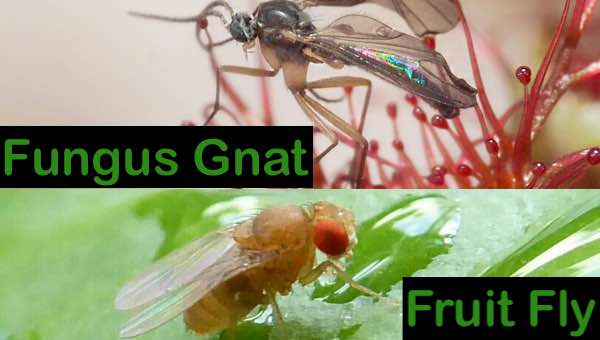
    Gaining control of pests that love to call your plants their home is a vital activity to make sure your plants are kept healthy. Some of the worst predators against cannabis plants are Fungus Gnats, these nasty buggers can be devastating to your final yield but they are not always easy to identify and can be confused with the common fruit fly. In this article, we will go through how you can identify these nuisance insects, what they will do to your plants and, most importantly, how you can stop them.

    How to spot a Fungus Gnat:

    • Dark gray/black color
    • Eyes are not visible
    • Long with dangly legs (a bit like a mosquito)
    • White spots (larvae) in the soil

    How to spot a Fruit Fly:

    • Brown/yellow color
    • Big red eyes
    • Fatter (a bit like a house fly)
    • Swarm around rotting fruit

    How do I identify a Fungus Gnat and a Fruit Fly?

    Fungus gnats and fruit flies can be difficult to distinguish as they look pretty similar. You want to make sure you have your diagnosis right before proceeding as fruit flies aren’t as deadly to your plants and usually only occur if you are keeping your plants near to fruit and vegetables (which fruit flies love).

    The first difference between them is color; fungus gnats range from a dark gray or black color whereas fruit flies are brown. Another distinguishing feature of the fruit fly is their eyes which are big and red, whereas the fungus gnats eyes you can barely see. Also, make sure that you check out the shape of the pest – fungus gnats are longer with dangly legs, whereas the fruit fly looks a bit more like a house fly but smaller.

    How can I stop Fungus Gnats from damaging my Cannabis Plants?

    Fungus gnats love to target cannabis as the bottom of your plants where it is nice and warm is the perfect environment for them to lay their eggs – and this can be a whopping hundred eggs per week. Their presence will seriously damage your root system which is the life-blood of the whole plant, so if left untreated this can go onto effect the growth of your plants, and they may even perish completely.

    – Preventing Fungus Gnats

    Preventing fungus gnats from targeting your plants is easier indoors than outdoors as you have more control over certain conditions. If you are an indoor grower make sure you don’t water your plants too often – always check the soil is dry before you water again as a very moist soil is what the fungus gnats love. When growing outdoors there is less that you can do, but one option is to sterilize your soil prior to use so that any eggs are removed.

    – Treating a Fungus Gnat Infestation

    If you are unlucky enough to get a fungus gnat infestation then there are plenty of remedies out there to get rid of them. Indoor growers can try yellow sticky tabs to catch the pests or, you can invest in a pest treatment. Pest treatments for fungus gnats should contain the bacteria Bacillus Thuringiensis which prevents them from eating and causes them to perish without harming your plants, Neem Oil is also a good natural alternative. If you are growing outdoors, you might want to try using ‘friendly’ insects that will eat up the fungus gnats that are in your soil.

    How can I stop Fruit Flies from damaging my Cannabis Plants?

    Fruit flies aren’t as damaging to your plants as fungus gnats, but you still don’t want them around if possible. The easiest way to do this is to remove any rotting or very ripe fruit from your kitchen so that these flies don’t spread to your grown room. Make sure you regularly keep an eye on any potential rotting food that might cause the fruit flies to return and get rid of it immediately.

    #1 Best Eco-Friendly Fungus Gnat Trap: Trapro 20 Pack Dual Sided

    A really simple way of catching those damaging fungus gnats is through yellow sticky traps. They are yellow in color as this attracts the pests to them, once they have landed on this trap they are not going to be leaving and can cause no more damage to your plants. These are made from a non-toxic material so are environmentally friendly and won’t harm your cannabis plants either.

    For use in cannabis plants, simply attach the yellow sticky trap to a stick and insert it into the soil. Within minutes you will see the yellow card fill up with fungus gnats. This trap is also good for catching other pests that frequent cannabis plants, including aphids, leafminers, thrips and whiteflies.

    #Fungus_gnats #Yellow_sticky_traps #Aphids #White_flies #Thrips

    #2 Best Natural Fungus Gnat Pesticide: Bonide 022 Ready-to-Use Neem Oil

    If you are wanting a natural product to treat your fungus gnat infestation then Neem oil is a great way of dealing with these pests if you like to give your plants the organic treatment. This product from Bonide is ready to use so you can get spraying straight away. It will get rid of the fungus gnats themselves and the eggs that they lay in your soil.

    Other benefits of using Neem oil is that it won’t harm beneficial insects that like to make your plants their home – such as earthworms and ladybugs. Neem oil can be used both indoors and outdoors so is a great choice for whichever growing medium you prefer. A great organic product that won’t cost the earth and will solve your fungus gnat problems.

    #Natural #Organic #Neem_oil #Fungus_gnats #Pesticide

    #3 Best Root Cleaner for Fungus Gnats: Root Cleaner – Soil Gnat, Fungus and Pathogen Killer

    For a dose of the strong stuff then look no further than this Root Cleaner from Green Cleaner. This can be used whether you grow in soil or hydroponically and can be applied right up until you harvest. Once applied, it will get to work killing all of the fungus gnats and their eggs. What’s more, the gnats won’t become immune to this stuff.

    The benefits of the Root Cleaner don’t stop there. It is also effective at getting rid of other pests such as aphids and thrips, and it also helps to prevent root rot. This product is safe to use without gloves and won’t cause any damage to your cannabis plants. We love the stuff!

    #Root_cleaner #Fungus_gnats #Aphids #Thrips #Root_rot

    #4 Best Fungus Gnat Preventer: Growstone Gnat Nix! Fungus Gnat Control

    They say prevention is better than the cure so why not invest in a product that will stop the fungus gnats laying their eggs in your plants in the first place? This non-toxic gnat control from Growstone is just the ticket. Through applying a layer to the top of your soil it will prevent female fungus gnats from laying their eggs, and also prevent hatching if there are eggs already there.

    Amazingly, it is made out of 100% recycled glass so won’t cause any harm to your plants. Through targeting fungus gnats at all stages of their life cycle this prevention method is a sure fire way of keeping your cannabis plants gnat free. Just make sure you fully cover the surface of your growing medium so that it is most effective.

    #Fungus_gnat_prevention #Natural #Gnat_control #Pest_control #Cannabis

    #5 Best Fast Working Fungus Gnat Control: Summit Responsible Solutions Mosquito Bits

    As the name suggests these Mosquito Bits work fast to kill any fungus gnats and larvae population present around your cannabis plants. Use these if you grow in soil – they can either be added to the topsoil or you can mix them through your potting soil before you plant to make sure any fungus gnat eggs are destroyed. Any present fungus gnats should be gone within 24 hours.

    Containing Bacillus Thuringiensis, this is the bacteria that prevents fungus gnats from eating which is why it achieves such fast results. What’s more, this fungus gnat control is approved for use in organic cultivation so great if you like the all-natural method. We’re sure that with this purchase fungus gnats will become a thing of the past.

    #Bacillus_Thuringiensis #Fungus_gnats #Fast_acting #Organic #Fungus_gnat_control

    Conclusion

    Knowing the difference between fungus gnats and fruit flies is important for any cannabis grower. While the fruit fly is an annoyance, it could be lethal to your plants if you mistake a fungus gnat infestation for an attack of fruit flies. Ensure that you know how to identify a fungus gnat and take preventative methods to stop their occurrence.

    If you do notice fungus gnats flying around your plants and wriggling around in your soil make sure that you act fast. With one of the products reviewed above, you can effectively wipe out the fungus gnat population and keep your plants healthy. Regularly checking for these predators on your plants is an essential practice for all marijuana growers so familiarising yourself with this article will go a long way to improving your yields!

  • How to get rid of mold: 10 way to kill mold on plants (Updated for 2020)

    The word ‘mold’ mainly refers to those fungi that grow in the form of hyphae i.e. multicellular thread-like structures. Fungi of the genera Aspergillus penicillium is mainly responsible for mold growth. They are found almost everywhere especially in the soil since it’s their natural habitat. The organic debris or leaves or roots etc. are decomposed by molds to form humus. During their growth cycle on organic material, molds produce many spores that are spread through the air currents. These spores help in the reproduction of molds everywhere. Wherever there’s some decaying matter present, the chances of spores in the surrounding air are higher. These spores when inhaled can cause several respiratory problems. Moisture and warmness are the basic requirements for the growth of mold. They don’t take in energy from photosynthesis, instead, With the help of heterotrophy they take it from the organic matter they are residing in. They are found in green; fuzzy black and white; and brown colors with a musty odor, both indoors and outdoors. If white fuzzy molds are seen on the leaves, plants or on seedlings; or black molds that are easily detectable inside houses, then it is the right time for you to learn how to get rid of molds through several effective natural and organic remedies, before you start to have health issues.

    How to kill mold on plants?

    #1 Liquid Copper Fungicide- Southern Ag (Chemical – Editors’ Choice)

    This product controls diseases related to not only fungi but bacteria too. It contains copper diammonium diacetate complex about 27%. This product can be used on many vegetables, fruits, ornaments, and live oak. If you see any sign of leaf spots, blights or rust, liquid copper fungicide is the best choice for you. Mix about ½ ounce of the product with a gallon of water. Best used with hose-end sprayers. Spray this product as soon as possible when the first sign of the diseases occurs or spray it from the beginning so that white fuzzy mold on seedlings can be prevented. Spray once every 7-10 days for better results.

    #2 Natural Industries Actinovate SP (Natural – Editors’ Choice)

    It contains the powdered concentrated form of the patented beneficial bacterium, which is 100% water-soluble. The microorganism present in it is the Streptomyces lydicus. Foliar diseases like downy mildew and powdery can be controlled and surpassed by this product. For that, it is needed to be made into an aquatic solution and sprayed on the affected areas. If soaked in water and directly applied on the soil, it can control many soilborne diseases including fusarium, Rhizoctonia and many other root-decaying fungi. With the presence of this microbe, it increases the availability of the nutrients and minerals for the plant. Once they are settled in the soil, these microorganisms feed on the plant waste and in return secrete beneficial byproducts. The plants who have this microbe present in its soil have a higher growth rate and insurance. This biological mold controller is quite compatible with its synthetic and organic competitors.

    Add ½ teaspoon in 1 gallon of water and spray the entire plant foliage thoroughly.

    #3 Prestop WP Biofungicide

    This product is completely organic, contains Gliocladium Catenulatum i.e. an antagonistic parasite of the cell wall of the plant pathogen through glucanase and chitinase enzymes. It settles in the roots and leaves of the plants, thus evacuating all the pathogen crowd. It can be applied in the form of drench, spray or directly incorporated in the soil. Many foliar and seed and root borne diseases can be prevented through Prestop. It is non-toxic and is on an equal effectiveness level as those of the chemical fungicides. This product can even kill bud mold after harvest.

    Add 1 ounce of Prestop in 1 gallon of water and spray using a mist sprayer in the evening.

    #4 Melaleuca peppermint concentrate- Naeterra

    One of the most dangerous molds i.e. the black mold, with Mildew can be removed easily with the help of this product. It is a natural fungicide and can kill almost all the molds and mold spores around the home. It is quite environment-friendly and thus is harmless to plants, pets, and kids, with greater effectiveness. Tea tree oil is considered as the most effective remedy against the black mold. When combined with this product with water in 1:4 portions respectively, it makes the most effective spray. The presence of plant-based emulsifiers and peppermint oil increases its blending property with water and helps in better sitting on the plant surface. After making the solution, shake it well and spray it. After 15 min sprays another coat and scrubs the mold of. Finally, rinse it with tap water. It is advised to use protective masks and gloves when dealing with the molds.

    #5 Powdery Mildew Killer- Growers Trust

    This product completely kills and terminates all the mildew and molds from plants and vegetables and even those molds on pot plants. It is formed in a manner that it directly attacks the spores of the molds. Powdery mildew that can kill an entire crop can be cleared out with this. It helps in two main beneficial factors of the plant i.e. restoration and prevention. It stops the growth of the germ tube, spore germination and kills the pathogen cells. This product induces an imbalance of the potassium ions within the mycelium, this slows the spores’ germination. The solution of the product indirectly sprayed onto the affected area. Make a solution by adding 3 ounces of Powdery mildew killer in 1 gallon of water and spray your plants using a hand-held power sprayer.

    #6 F-stop – Fertilome

    This fungicide is mainly for the use of gardens and lawns only. It protects many plants including ornamented shrubs, fruits, roses, nuts, vegetables, berries and flowers from mold and many other damaging diseases with its just 1% Myclobutanil formula. The diseases it mainly fights against are Powdery Mildew, Leaf black spot, Red threat, Brown Rot, Rust, Blights, Brown patch scab, and Dollar spot. This product should be applied when the plant leaves are dried, or the temperature is suitable enough. Mostly it is advised to apply before disease favorable weathers like humid or cloudy weather. If it rains after the product is applied and wasn’t dried yet, apply it again. Moreover, if the temperature is more than 90F then do not apply it, since it may damage the plant. Apply it when the wind is calm, like in the morning especially. Add 2 ounces of F-Stop in 1 gallon of water to spray on all edible plants using a mist sprayer.

    #7 The Amazing Doctor Zymes Eliminator

    It’s environment-friendly and thus it has a great momentum to be used for medicinal plants, crops or other lawn plants. It can be used for indoor plants too. It eliminates all the insects, fungus, molds and mildew. This product can be used up to the day of harvest or on the harvest day too. Its eco-friendly solution won’t clog the stomata and contains no oil, also with no consequential residue. Fungal diseases like a Black spot on roses, Scab, Rust leaf spot, tip blight, Anthracnose, Downy Mildew, and twig, etc. can be easily healed and prevented with this. When spraying it, take into consideration the temperature and time of day. It is always advised to use it in the evening when the temperature is below 80F. The spraying solution should be made by using neutral tap water with a temperature between 70-98F. Often a question is asked: How to stop mold on drying buds? Even for that, this product serves the best too. Add 6 ounces of Eliminator in 1 gallon of water and spray on the affected plants thoroughly.

    What is the mold?

    Mold is a species that is neither considered in the animal or plant kingdom. It is a fungus since it does not take in energy through photosynthesis, and thus no energy from the sun is directly utilized by it. Instead, the sun radiation kills it. The only energy they get is from the organic debris on which they are growing. Their enzymes eat and decay the organic matter on which they are growing. These organic matters may include dead plants, animals and leaves, etc. The main requirement for mold growth is moisture. This moisture accumulation can be caused by humidity, water intrusion or condensation. Mostly molds only require the appropriate to stay wet for 24-48 hours before it starts growing. There is a mold named Xerophilic that can survive only with humidity. Other than moisture, the temperature requirement is there too. Most of them grow best in warm temperatures, whereas, there are still some molds present that can even grow at 2 degrees Celsius.

    What does Black mold look like?

    Stachybotrys chartarum is the name of the infamous black mold. This black mold can grow in houses and quite dangerous for humans and animals. It is advised whenever black mold is detected, remove it as soon as possible. It is greenish-black gelatinous in appearance. Also, seems slimy since there’s always a coat of water on top. But if its water supply runs out, it might appear to be powdery and dry.  Moreover, there are many molds that might appear like the black mold, but to make sure what type of mold is it, a mold expert is duly required.

    What does mold smell like?

    Mold might cause toxic consequences to the inhabitants if it is one of the 14 infamous molds. The smell gives out to be musty if it is associated with the black mold or unpleasant like wet socks or rotten paper with other molds. Whenever molds eat, they release Microbial Volatile Organic Compounds (MVOC) that smells like there is something wet and has a pungent smell. Sometimes, the smell is also said to be meaty or earthy or alcohol fermentation smell.

    What happens if you eat mold?

    Eating mold will never kill you. As soon as a person digest it, the feeling of nausea and vomiting struck him, naming the food poisoning. If a person is allergic to it, then he may start having irritation in the throat, skin, eyes, etc. Though all the molds are not that harmful, there are some that can even cause cancer by producing toxic mycotoxins in your stomach.

    How to clean mold?

    If you want to clean mold through non-toxic home remedies, then below are some methods stated for you.

    #8 Baking Soda Solution with Oil and Soap

    White fuzzy molds on plants that can be killed by the bursting that little fungus by making an aquatic solution of the baking soda with the other components and then spray out on the affected areas. When it comes in contact with the fungus, it causes such a reaction that the cell wall of the fungus bursts out and thus kills the mold. The use of Oil and Soap helps it spreads evenly and stick effectively. For a one-gallon solution, 1 teaspoon of oil, 1 tablespoon of baking soda and 1 teaspoon of castile soap is mixed. This solution must be sprayed once a week to either kill the existing mold or to save the new sapling from getting infested.

    #9 Dilute Milk Spray

    Milk has the properties to weaken and diminish the white molds on buds or white mold on plants. But at the same time, if not used correctly, it can cause the growth of new molds too. To prevent it from happening always dilute solution of milk is utilized, in which the proportion of milk to water is 1:9. This remedy is applied on a weekly basis, so the re-growth of the fungus can be prevented.

    How to kill molds?

    Molds can be killed by the products mentioned above that are fungicides or through home remedies. Other than that, a few methods are written below:

    #10 Cancrobium mold control

    It is a professional formula that prevents the re-growth of mold and kills the already present mold. It contains no toxic chemicals like ammonia or bleach. This remedy is ideal for home-usage. It saves your home before any permanent damage may occur. Apply this solution in a thin layered form over the affected area and allow it to dry completely. Afterward, scrub the surface to clean the mold and then re-apply to save it from future destruction.

    How to kill black mold?

    If you see black mold in your house, then do not try to clean by yourself if you don’t know much. Black mold, when disturbed releases many toxic fumes, that can cause serious health issues. Professionals know how to clean it with a little disturbance only. It is even advised to leave your residence temporarily too while the mold is getting cleaned.

    However, if you are still willing to do it yourself and want to know how to get rid of black mold? then ammonia might be the best choice for you. Before starting the job, wear safety gloves and mask. Make a 1:1 solution of ammonia and water and spray evenly on the contaminated areas. Then allow it to sit for 5-10 minutes and then scrub it with a brush or scrub and clean it afterward. Apply the coat again if required, or to save it from future infection.

  • How to get rid of thrips: 11 way to kill thrips on plants (Updated for 2021)

    Thrips belong to order Thysanoptera that are tiny, slender, sucking insects having fringed wings and feed on the outer layer of small leaves, tender shoots and flowers causing stippling on the upper surface of the leaves besides silvering of the lower surface of the leaves. The stippling of the leaves leads to discoloration usually turning them yellow and eventually defoliate from the plant. Thrips secrete black frass on the lower surface of the leaves. Thrips are also considered responsible for spreading some plant pathogens and diseases while they are present in a garden. Some species of Thrips live on fungal spores and pollen and are considered harmless for the host plants while some other species feed on some plant pests and mites that are beneficial for the green escape. They are capable of spreading with the wind and water splashes along with the infested stuff transported to your garden. If you are experiencing leaf stippling, discoloration and defoliation then its time to learn how to get rid of Thrips in your plants using some effective and powerful biological, organic and natural remedies;

    How to kill thrips on plants?

    #1 Neudorff BugFree (Chemical – Editors’ Choice)

    BugFree is easy to use spray that contains pyrethrins and rapeseed oil at 0.045% and 8.25% respectively as its active ingredients. Pyrethrins are extracted from the flowers of the chrysanthemums that decompose rapidly on its exposure to air and sunlight that’s why it poses no threat to the environment or humans at all and is permitted to use in organic gardening. It works well against eggs, larva and mature insects altogether. This Thrips control spray performs well if sprayed in the evening.

    #2 Dragonfli Thrip Killer sachets – (Amblyseius cucumeris) (Natural – Editors’ Choice)

    Amblyseius cucumeris is tan-colored predatory mites that feed Thrips on plants when applied early during the growing season. They need almost 12 days to reach the adult stage that lasts for 30 days. Adult females may further lay up to 35 eggs during this period whereas it can eat 1 Thrips in a day.
    As cucumeris need 3-4 weeks for its development in the garden, its release must be timely so that it can provide long control for another 3-4 weeks. Each sachet contains 1000 predatory mites and holds an easy release method.

    #3 E-Coco Products UK ORGANIC THRIPS KILLER, PESTICIDE

    Its active ingredient is Chitinase derived from the worm castings concentrate. It works on the chitin of the Thrips that stops further shedding their skin and die immediately on coming contact with Chitinase. It’s strong against the Thrips while no harm to the garden plants. It’s purely organic control that is made from the red worms and provides you overnight strategy to get rid of Thrips in your edible greens and ornamental plants.
    Simply point the spray aperture to the direction of infestation on your plants keeping a distance of 10 cm to give a concentrated burst. Liquid concentrate will leach down to the hiding places of Thrips and destroy them. Avoid applying if rain is expected as it reduces its efficacy to kill Thrips. Always apply in the evening and check with the dead Thrips the next morning by gently shaking the foliage. Putting a white sheet under foliage will yield the dead, that is gone.

    #4 Doctor Zymes Eliminator Spray

    Eliminator spray is composed of all naturally occurring materials combined with biologically stimulating ingredients using the fermentation process. Its main ingredient i.e. citric acid that works as contact poison kills Thrips that directly come under spray coverage along with other soft-bodied insects in your garden. Citric acid is considered to break down organic matter quickly that’s why Thrips eggs are broken down to organic matter before hatching takes place. It is considered a revolutionary green formula and best spray for Thrips in house and Thrips on plants as well. Moreover, due to organic listing, it can be sprayed till the day of the harvest on your garden plants. Eliminator doesn’t block stomatal openings on leaves that lead to more photosynthesis and enhance the yield of your edible greens.
    Add 4 ounces of Eliminator Spray in 1 gallon of warm water using a power sprayer and completely wash your plants from upside down. No need to add any other insecticide or adjuvant while making mixtures for spray.

    #5 City Hydroponics Spray and Grow Thrips Killer

    This is a foliar spray that contains additional nutrients along with the killing properties of insecticide derived from different plant extracts and is considered best to kill Thrips on hibiscus and other edible plants. It is safe to use during all growth stages of the plants that ensure healthy and pest free plants in your garden. Foliar nutrients give a boost to the garden greens and edibles while essential salts of fatty acid kill Thrips biologically.
    Add 25 ml of this solution in 1 liter of water and apply on the entire foliage of the plants using a mist sprayer.

    #6 RHS- Bug & Mildew Control

    It’s a pesticide-free ready to use spray that contains the blend of different surfactants and adjuvants that adhere thrips with the surface of the leaf, unable to move and die of starvation. It also works great against aphids, whiteflies and spider mites in the edible gardens. It also kills thrips in soil that tends to cling to the stem or shoots of the plants to reach on plant foliage. Due to its adherence qualities, it becomes a popular choice for organic gardeners to use on fruits, vegetables, and flowers. It also contains nutrients necessary to bloom and flourish flowers. No harvest interval is needed after its application on the edible greens.

    #7 Bonide Captain Jack’s Dead Bug Brew

    This product contains Spinosad derived from the bacteria that naturally occur in the soil. It performs well on the variety of pests including but not limited to whiteflies, aphids, codling moth, caterpillars and especially Thrips. It can be used on the variety of fruits, vegetables, and ornamentals but have certain limitations to use on microgreens and short tenure vegetables due to some residual effects that may prolong for many days after its use.
    Complete coverage is needed both in the upper and lower plant foliage. Simply connect the garden hose with the concentrate bottle and follow the instruction on the label. Spraying is advised on the first sighting of the Thrips in any garden.

    What are Thrips?

    Bodies of most of the adults are often slender and elongate measuring less than 1/20th of inch bearing long threads on the edges of both pairs of long and narrow wings. Larvae are slender or elliptical without the formation of wings. Their color ranges from semi-transparent to white, yellow to brown and black in different species. More than 6000 species have been reported so far in different parts of the world.

    What do Thrips look like?

    Thrips are tiny, slender, sucking insects having fringed wings and feed on the outer layer of small leaves, tender shoots and flowers causing stippling on the upper surface of the leaves besides silvering of the lower surface of the leaves. Their color ranges from semi-transparent to white, yellow to brown and black in different species.

    Where do thrips come from?

    Adults feed on the pollens in the flower and the lower surface of the leaves where females lay down their elongated and kidney-shaped eggs on the leaves, curvatures and on the buds of the plant. Most of the eggs drop on the soil or within crevices where hatching takes place. Under favorable conditions, there are almost 8 generations in a year. Thrips overwinter on organic litter or debris to start reproducing upon getting favorable conditions. Some thrips come from the newly arrived nursery stuff while others through winds and rain splash in your garden.

    Are Thrips harmful?

    Thrips are associated with transmitting different plant viruses by feeding on your edible garden and microgreens. Topsoviruses being common among 20 virus transmitted diseases on vegetables especially Tomatoes. Besides sucking sap from the leaves and tender shoots they cause discoloration and defoliation of the leaves and de-shape the fruits and vegetables infested. This fear is more prominent when the plants are in a younger stage. Upon heavy infestations, there is a fear that they might bite you but it just causes a minor skin irritation that doesn’t last long.

    How to get rid of thrips naturally?

    #8 Garden Safe ASDFFG Neem Oil Extract Concentrate

    This is a botanically derived formula that contains Azadirachtin in 70% Neem oil extract that works fine against Thrips, spider mites, and Aphids along with strong control over the fungi borne diseases. It’s organic and safe on all edible greens to the day of harvest. Moreover, it holds longevity in control and can be repeated without any harmful effects on the edibles.
    Put 1 ounce of concentrate in 1 gallon of water and thoroughly wet plant foliage using a mist sprayer in the evening. Apply water to the plants immediately after spraying to avoid any sort of physiological stress on the leaves.

    #9 Sticky Thrip Leafminer Traps

    Sticky traps are the best natural way to control infestations of Thrips on your garden plants. Hang these traps at the level of plant foliage by keeping a distance of 7 feet between the traps. Traps can also be placed at the start and end of every row in your garden. Avoid them from getting dirt or replace if the infestations caught is too high to stick more insects. This is fairly cheaper and one of the best natural ways to control Thrips on all edible plants in your garden.

    Coldwater treatment

    Thrips infest your garden plants when the temperature is fairly high around 77°F or above and relative humidity is comparatively low. This is the time to give a burst of chilled water from the undersides of the leaves to wash Thrips away. Large scale commercial farmers often adopt this practice during the hot summer days when the infestations are high during the early stages of crop growth. This natural phenomenon works significantly well and proven across the commercial farming systems while practicing at a small scale can be more fruitful for the home gardeners. And, another option is to wait for a good rain to wash them away from your edible plants.

    #10 Green Cross Isopropyl Alcohol (70%)

    Isopropyl Alcohol or Rubbing Alcohol does a good job against all soft-bodied insects if you are afraid of applying insecticides to your edible greens and want to stay organic. Rubbing Alcohol contains 70% Ethanol that works on the Chitin of the insects on the exoskeleton. The melting of the chitin results in the killing of the insects as they lose the ability to molt hence die of starvation. It is necessary that the Water-Alcohol solution reach the hiding places of the insects on plants. For this reason, you need to wash your plants thoroughly using a pressure hand-Sprayer.
    Add 1 part of Rubbing Alcohol to 4 parts of water and spray your plants in the evening avoiding the sensitive indoor plants. You may repeat spray after consecutive days if the infestations prolong. Furthermore, alcohol spray also destroys eggs of the Thrips lay down in the crevices of your edible plants.

    #11 Harris Diatomaceous Earth (DE) food grade

    Diatomaceous earth (DE) is derived from the tiny, fossilized aquatic organisms that contain several tiny pores while the insects consider these pores as their hiding place on the plants. Once they are inside DE they can’t move out as their skin tangles inside pores that don’t let Thrips come out of this stuff. The result is the restriction in their feeding that kills them at the spot where they were stuck.
    Simply pour this fine mesh on the floral parts of the plants and wait for them to attack your plants. This is another best organic solution to prevent Thrips attack on your plants.
    Besides working on the number of organic, natural and biological control, few cultural practices are necessary to keep your edible plants free from the infestations of the Thrips in your garden space. These practices will help you minimize all-time Thrips infestations whether you stay organic or natural;

    How to prevent Thrips infestation on your plants?

    – Prune and destroy leaves that are more infested with Thrips if you are growing a limited or small amount of plants in your garden.
    – Control weeds and plant debris in the corners of the garden or at neglected areas of your garden because weeds serve as the alternate host of Thrips.
    – Grow only those plants that are well-adapted to the climatic conditions of your garden.
    – Work on the plant vigor and health by feeding them with balanced essential nutrients and fertilizers while the over-fertilizing with nitrogen may bring more infestation. Whereas, thrips damages are more often on the stressed plants.
    – Try to manage fair intervals while irrigating your plants. Long irrigation gap brings dryness, more favorable for Thrips infestation.
    – Apply reflective mulch or ribbons to deter Thrips flying on your plants.